Who is a Anaesthesia Doctor?
An Anaesthesia Doctor (also called an Anaesthesiologist or Anaesthetist) is a medical specialist who makes sure you are safe, comfortable, and free from pain during surgery or other medical procedures. They give you medicines that put you to sleep or numb part of your body so you do not feel pain, and they watch over your breathing, heart, and blood pressure throughout the procedure. If you are scheduled for an operation or a procedure that requires sedation, your care team will arrange for an Anaesthesia Doctor to be with you.
Duties and Responsibilities of a Anaesthesia Doctor
When to See a Anaesthesia Doctor
You should consider booking an consultation if you are experiencing any of the following symptoms or conditions:
- You are scheduled for any surgical operation that requires anaesthesia
- You need a procedure such as a colonoscopy, endoscopy, or biopsy under sedation
- You are pregnant and want pain relief (epidural) during labour or a caesarean section
- You have been told you have a difficult airway or breathing problem before a past surgery
- You have a heart condition, diabetes, or other chronic illness and are about to have surgery
- You are experiencing severe or long-lasting pain that has not responded to ordinary medicines
- You need a nerve block or injection to manage pain from an injury or after an operation
- Your child is scheduled for surgery and you want to understand how anaesthesia will be given
Types of Anaesthesia Doctor Specialists
Obstetric Anaesthesia
Specialises in pain relief and anaesthesia for women during labour and childbirth, including epidurals and caesarean sections.
Paediatric Anaesthesia
Focuses on providing safe anaesthesia for babies, children, and teenagers undergoing surgery or procedures.
Cardiac Anaesthesia
Manages anaesthesia for patients having heart surgery, requiring specialised monitoring of heart function.
Neuroanesthesia
Provides anaesthesia for brain and spine surgeries, carefully protecting the nervous system throughout the procedure.
Pain Medicine
Diagnoses and treats long-term or chronic pain conditions using nerve blocks, injections, and other techniques.
Critical Care / Intensive Care
Manages the care of seriously ill patients in the intensive care unit (ICU), including those on breathing machines.
What to Expect at Your Appointment
Before your procedure, the Anaesthesia Doctor will meet with you to ask about your health history, any medicines you take, allergies, and whether you have had anaesthesia before. They will check your heart, lungs, and airway to plan the safest approach for you. You can ask any questions you have at this visit — the team wants you to feel calm and confident going into your procedure.
Training & Education Credentials
An Anaesthesia Doctor completes a medical degree (MBChB or equivalent) followed by a residency training programme of four to five years specifically in anaesthesiology. In Ghana and West Africa, specialists may hold postgraduate qualifications from the Ghana College of Physicians and Surgeons, the West African College of Surgeons, or an internationally recognised board.
Frequently Asked Questions
Is anaesthesia safe? Will I wake up during surgery?
Modern anaesthesia is very safe. Your Anaesthesia Doctor monitors you every second of the procedure to make sure you stay asleep and comfortable. Waking up during surgery (awareness) is extremely rare and your doctor takes specific steps to prevent it.
How much does anaesthesia cost in Ghana?
The cost depends on the type of procedure, the hospital, and how long the operation takes. At public hospitals under the National Health Insurance Scheme (NHIS), some anaesthesia costs may be covered. It is best to ask the hospital's billing department for a clear estimate before your procedure.
What should I do to prepare before receiving anaesthesia?
You will usually be asked not to eat or drink anything for at least six to eight hours before your procedure — this is very important for your safety. Tell your doctor about all medicines, herbal remedies, or supplements you take, and inform them of any allergies. Follow any other instructions given by your surgical team.
What should I bring to my pre-anaesthesia appointment?
Bring a list of all medicines and supplements you currently take, your NHIS card or insurance details, any previous medical records or test results, and a list of any allergies you have. If you have had surgery before, let the doctor know how you reacted to anaesthesia in the past.
When should I seek urgent help after receiving anaesthesia?
After your procedure, go to the nearest emergency unit or call your doctor immediately if you have difficulty breathing, severe chest pain, a very high fever, unusual swelling, or if you feel extremely confused or cannot be woken up properly. Some drowsiness and mild nausea after anaesthesia is normal, but these serious symptoms need urgent attention.
Book a Anaesthesia Doctor
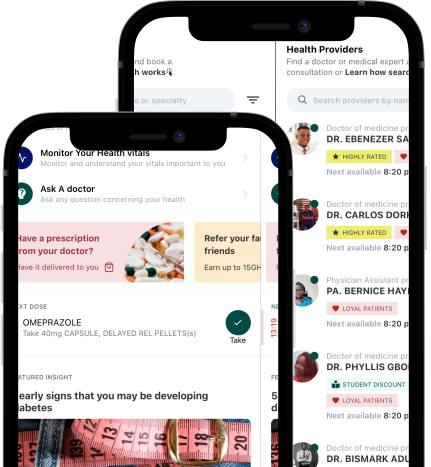
Find verified board-certified Anaesthesia Doctors on DrDoGood. Compare reviews, check real-time availability, and schedule your appointment online.
All practitioners on DrDoGood are thoroughly vetted for credentials, licensing, and patient satisfaction histories.
Your doctor is only an appointment away.
Feeling unwell? Our friendly healthcare professionals are here to listen, advise, and care for you. Just open the app for quick, expert help. No stress, no fuss.