Who is a Bone & Joint Doctor?
A Bone & Joint Doctor — also called an orthopaedic specialist — is a doctor who diagnoses and treats problems affecting your bones, joints, muscles, and ligaments. Whether you have a broken bone, painful knees, a sports injury, or back pain that won't go away, this is the right specialist to see. Many people in Ghana and West Africa visit a Bone & Joint Doctor for conditions like arthritis, fractures, and joint pain that make everyday activities difficult.
Duties and Responsibilities of a Bone & Joint Doctor
When to See a Bone & Joint Doctor
You should consider booking an consultation if you are experiencing any of the following symptoms or conditions:
- Persistent joint pain or swelling that has lasted more than a few weeks
- A broken or fractured bone after a fall or accident
- Knee, hip, or shoulder pain that makes walking or daily tasks difficult
- A joint that feels unstable, locks up, or gives way
- Back or neck pain that spreads down your arm or leg
- A sports injury such as a sprain, dislocation, or muscle tear
- Swollen, stiff, or deformed joints that are getting worse over time
- A child with a limp, bone deformity, or unusual walking pattern
- Numbness or tingling in the hands or feet linked to a bone or joint problem
- Pain or difficulty moving after a road traffic accident
Types of Bone & Joint Doctor Specialists
Joint Replacement Surgery
Focuses on replacing severely damaged joints — most commonly the hip and knee — with artificial implants to relieve pain and restore movement.
Sports Medicine & Injury
Specialises in treating injuries to muscles, tendons, and ligaments that occur during sports or physical activity.
Spine Surgery
Deals with conditions affecting the backbone, including slipped discs, spinal deformities, and nerve compression causing back or leg pain.
Paediatric Orthopaedics
Treats bone and joint problems in children, including club foot, growth plate injuries, and limb deformities.
Trauma & Fracture Care
Manages serious bone injuries from accidents, falls, and road traffic crashes, including complex fractures that need surgery.
Hand & Upper Limb Surgery
Focuses on conditions affecting the hand, wrist, elbow, and shoulder, such as carpal tunnel syndrome and rotator cuff tears.
What to Expect at Your Appointment
At your first visit, the Bone & Joint Doctor will ask you about your pain — where it is, how long you have had it, and what makes it better or worse. They will gently examine the affected area, checking your movement, strength, and any swelling. They may request an X-ray or scan to get a clearer picture, and they will explain your options in simple terms before deciding on the best treatment together with you.
Training & Education Credentials
A Bone & Joint Doctor completes medical school followed by a specialist residency in orthopaedic surgery, which typically takes five to seven additional years of training. In Ghana and West Africa, they are certified by the West African College of Surgeons (WACS) or the Ghana College of Physicians and Surgeons.
Frequently Asked Questions
How much does it cost to see a Bone & Joint Doctor in Ghana?
The cost of a consultation varies depending on whether you visit a government hospital, a private clinic, or a specialist centre. At government hospitals, fees are generally lower and may be covered partly by the National Health Insurance Scheme (NHIS). Private specialist consultations typically cost more, so it is worth calling ahead to ask about fees and whether your NHIS card is accepted.
What should I bring to my first appointment?
Bring your NHIS card, any previous X-rays or scan results, and a list of any medicines you are currently taking. If you have seen another doctor about the same problem, bring their referral letter or notes. Wearing loose, comfortable clothing makes it easier for the doctor to examine the affected area.
Do I need a referral to see a Bone & Joint Doctor?
In most government hospitals in Ghana, you will need a referral from a general doctor or a district hospital before seeing a specialist. At private clinics and specialist centres, you can often book directly without a referral. If you are unsure, call the facility first to find out their process.
When should I go to the emergency room instead of booking an appointment?
Go to the emergency room immediately if you have a bone that looks out of place or is poking through the skin, if you cannot move a limb after a fall or accident, or if you have severe swelling and intense pain after an injury. These are signs of a serious fracture or dislocation that needs urgent care. Do not wait for a regular appointment in these situations.
Will I definitely need surgery?
Not all bone and joint problems require surgery. Many conditions — including mild fractures, arthritis, and sprains — can be treated with rest, medicines, physiotherapy, or a brace. Your doctor will only recommend surgery if other treatments have not worked or if the injury is too serious to heal on its own. They will explain all your options clearly before any decision is made.
Book a Bone & Joint Doctor
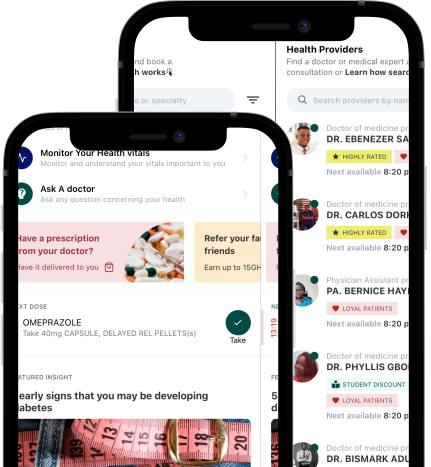
Find verified board-certified Bone & Joint Doctors on DrDoGood. Compare reviews, check real-time availability, and schedule your appointment online.
All practitioners on DrDoGood are thoroughly vetted for credentials, licensing, and patient satisfaction histories.
Your doctor is only an appointment away.
Feeling unwell? Our friendly healthcare professionals are here to listen, advise, and care for you. Just open the app for quick, expert help. No stress, no fuss.