Who is a Brain & Nerve Doctor?
A Brain & Nerve Doctor — known medically as a Neurologist — is a specialist who diagnoses and treats conditions affecting the brain, spinal cord, and nerves throughout the body. They help patients who experience problems like headaches, seizures, weakness, numbness, or memory loss. If you or a family member has any of these concerns, a Brain & Nerve Doctor is the right specialist to see.
Duties and Responsibilities of a Brain & Nerve Doctor
When to See a Brain & Nerve Doctor
You should consider booking an consultation if you are experiencing any of the following symptoms or conditions:
- Sudden severe headache that feels like the worst of your life
- Seizures or episodes of shaking and loss of consciousness
- Weakness or numbness on one side of the body
- Sudden difficulty speaking, understanding, or finding words
- Recurring or very severe migraines that do not respond to ordinary painkillers
- Memory loss, confusion, or sudden changes in behaviour
- Dizziness, loss of balance, or difficulty walking
- Blurred or double vision that comes on suddenly
- Tingling, burning, or loss of feeling in the hands or feet
- Trembling hands or shaking that affects daily activities
Conditions Treated
Common conditions that a Brain & Nerve Doctor can diagnose, manage, or treat:
Headache
Also known as: cephalgia, dolor capitis, ha, head ache, head pain
Types of Brain & Nerve Doctor Specialists
Epilepsy & Seizure Disorders
Focuses on diagnosing and controlling seizures using medication and other treatments.
Stroke Medicine
Specialises in the emergency treatment and long-term recovery of patients who have had a stroke.
Headache Medicine
Deals with the diagnosis and management of chronic migraines and other severe headache conditions.
Movement Disorders
Treats conditions that affect movement and coordination, such as Parkinson's disease and tremors.
Memory & Dementia Care
Focuses on evaluating and managing memory loss, Alzheimer's disease, and other forms of dementia.
Neuromuscular Medicine
Treats diseases that affect the muscles and the nerves that control them, such as muscle weakness or nerve damage.
Paediatric Neurology
Specialises in brain and nerve conditions in children, including developmental delays and childhood epilepsy.
What to Expect at Your Appointment
At your first visit, the Brain & Nerve Doctor will ask you detailed questions about your symptoms, how long you have had them, and your general health history. They will then carry out a careful physical examination, checking your reflexes, balance, coordination, and memory. Depending on what they find, they may request tests such as a brain scan (CT or MRI), an EEG to check brain activity, or blood tests — all of which will be explained to you clearly before they are done.
Training & Education Credentials
A Brain & Nerve Doctor completes a medical degree followed by several years of specialist training in neurology, typically totalling eight to twelve years of education and supervised practice. In Ghana and across West Africa, they are certified by the West African College of Physicians or an equivalent national medical board.
Frequently Asked Questions
How much does it cost to see a Brain & Nerve Doctor in Ghana?
The cost of a neurology consultation in Ghana varies depending on whether you visit a government hospital, a private clinic, or a specialist centre. At public hospitals, fees are generally lower and may be partly covered by the National Health Insurance Scheme (NHIS). It is a good idea to call ahead and ask about consultation fees and whether your NHIS card is accepted.
What should I bring to my first appointment?
Bring your NHIS card or any health insurance documents, a list of all medicines you are currently taking, and any previous test results or hospital records related to your condition. If you have had a brain scan or blood tests done before, bring those reports along so the doctor does not have to repeat them unnecessarily.
How do I prepare for my neurology appointment?
Before your visit, write down your symptoms — when they started, how often they happen, and anything that makes them better or worse. Note any family history of brain or nerve conditions, such as epilepsy or stroke. Try to bring a family member or trusted person with you, as they may have noticed things about your condition that you have not.
When should I go to the emergency room instead of booking an appointment?
Go to the nearest emergency room immediately if you or someone around you suddenly cannot speak, has a drooping face, or has weakness on one side of the body — these are signs of a stroke. Also seek emergency care for a first-time seizure, a sudden very severe headache, or loss of consciousness. Do not wait for a scheduled appointment in these situations.
Can a Brain & Nerve Doctor treat my child?
Yes — some neurologists specialise in treating children and are called paediatric neurologists. They manage conditions such as childhood epilepsy, developmental delays, and cerebral palsy. If your child is having seizures, developmental problems, or other brain and nerve concerns, ask your general doctor for a referral to a paediatric neurologist.
Book a Brain & Nerve Doctor
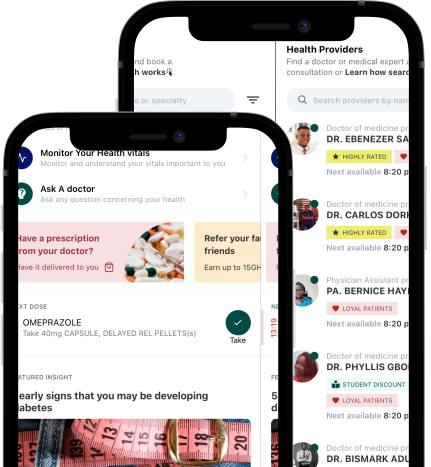
Find verified board-certified Brain & Nerve Doctors on DrDoGood. Compare reviews, check real-time availability, and schedule your appointment online.
All practitioners on DrDoGood are thoroughly vetted for credentials, licensing, and patient satisfaction histories.
Your doctor is only an appointment away.
Feeling unwell? Our friendly healthcare professionals are here to listen, advise, and care for you. Just open the app for quick, expert help. No stress, no fuss.