Who is a Foot & Ankle Doctor?
A Foot & Ankle Doctor is a specialist who diagnoses and treats problems affecting the feet, ankles, and lower legs. Whether you have pain from walking, a sports injury, a wound that won't heal, or a condition like flat feet or a bunion, this doctor can help you get back on your feet. People of all ages in Ghana and West Africa — from children with foot deformities to older adults with joint pain — can benefit from seeing a Foot & Ankle specialist.
Duties and Responsibilities of a Foot & Ankle Doctor
When to See a Foot & Ankle Doctor
You should consider booking an consultation if you are experiencing any of the following symptoms or conditions:
- Foot or ankle pain that does not improve after a few days of rest
- A sprained or twisted ankle that is swollen and difficult to walk on
- A wound or sore on the foot that is not healing, especially if you have diabetes
- Numbness, tingling, or burning sensation in the feet
- A bunion (bony lump at the base of the big toe) causing pain
- Heel pain or pain under the foot when walking or standing
- Flat feet or high arches causing discomfort or difficulty walking
- A broken bone or suspected fracture in the foot or ankle
- Recurring foot infections, fungal nails, or ingrown toenails
- Swelling in one or both ankles that does not go away
Conditions & Visit Reasons
Select a specific condition to learn more or search for specialists offering directed therapy plans:
Types of Foot & Ankle Doctor Specialists
Diabetic Foot Care
Specialises in preventing and treating foot wounds, infections, and nerve damage caused by diabetes.
Sports Medicine (Foot & Ankle)
Focuses on foot and ankle injuries in athletes, such as sprains, stress fractures, and tendon tears.
Foot & Ankle Surgery
Performs operations to correct deformities, repair fractures, and relieve chronic pain in the foot and ankle.
Paediatric Foot & Ankle
Treats foot problems in children, including clubfoot, flat feet, and walking difficulties.
Reconstructive Surgery
Rebuilds the foot and ankle after severe trauma, infection, or deformity to restore function and appearance.
What to Expect at Your Appointment
At your first visit, the Foot & Ankle Doctor will ask you about your symptoms, how long you have had them, and any past injuries or health conditions like diabetes. They will examine your feet and ankles, watch how you walk, and may press gently on certain areas to find where the pain is coming from. They might request an X-ray or scan to get a clearer picture — the goal is to understand your problem fully so they can recommend the best treatment for you.
Training & Education Credentials
A Foot & Ankle Doctor completes medical school followed by several years of specialist training in orthopaedic surgery or podiatric medicine, with a focused fellowship in foot and ankle conditions. In Ghana and West Africa, these specialists are typically certified by the West African College of Surgeons or an equivalent recognised medical board.
Frequently Asked Questions
How much does it cost to see a Foot & Ankle Doctor in Ghana?
The cost of a consultation varies depending on the hospital or clinic — private specialist visits in Ghana typically range from GHS 200 to GHS 600 or more. If you need X-rays, scans, or surgery, there will be additional costs. It is a good idea to call ahead and ask about fees, and to check whether your health insurance covers specialist visits.
What should I bring to my first appointment?
Bring any previous medical records, X-rays, or scan results related to your foot or ankle problem. If you have diabetes, bring your recent blood sugar results. Wear or bring the shoes you use most often, as the doctor may want to look at them. A list of any medicines you are currently taking will also be helpful.
Do I need a referral to see a Foot & Ankle Doctor?
In many hospitals in Ghana and West Africa, you can book directly with a specialist without a referral, especially at private clinics. However, some health insurance plans or public hospitals may require a referral from a general doctor first. It is best to check with the hospital or your insurance provider before booking.
When should I go to the emergency room instead of booking an appointment?
Go to the emergency room immediately if your foot or ankle is severely swollen, deformed, or you cannot put any weight on it after an injury — this may be a serious fracture. Also seek urgent care if you have a deep wound, signs of infection (redness spreading, pus, fever), or if you are diabetic and notice a new wound or darkening of the skin on your foot.
Can foot and ankle problems be treated without surgery?
Yes — many foot and ankle conditions can be treated without surgery using rest, physiotherapy, special shoe inserts (orthotics), pain medicines, or injections. Surgery is usually only recommended when other treatments have not worked or when the problem is severe. Your doctor will always discuss all your options with you before deciding on a plan.
Book a Foot & Ankle Doctor
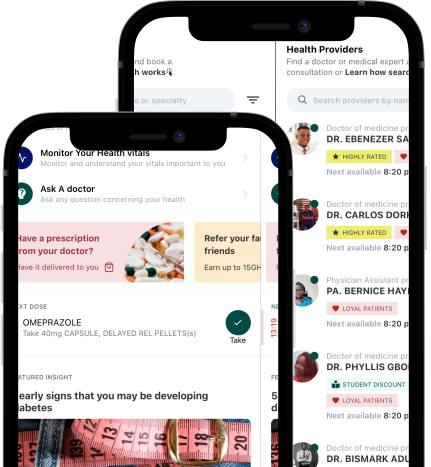
Find verified board-certified Foot & Ankle Doctors on DrDoGood. Compare reviews, check real-time availability, and schedule your appointment online.
All practitioners on DrDoGood are thoroughly vetted for credentials, licensing, and patient satisfaction histories.
Your doctor is only an appointment away.
Feeling unwell? Our friendly healthcare professionals are here to listen, advise, and care for you. Just open the app for quick, expert help. No stress, no fuss.