Who is a General Surgeon?
A General Surgeon is a doctor who performs operations to treat a wide range of health problems affecting the body — from the stomach and intestines to the skin, breast, and thyroid gland. They are trained to diagnose conditions that may need surgery and to carry out those operations safely. You should see a General Surgeon if your doctor has referred you for an operation, or if you have a lump, hernia, or abdominal problem that has not improved with other treatment.
Duties and Responsibilities of a General Surgeon
When to See a General Surgeon
You should consider booking an consultation if you are experiencing any of the following symptoms or conditions:
- A lump or swelling anywhere on the body that is growing or painful
- A hernia — a bulge in the groin, belly button, or abdomen
- Severe or persistent stomach pain that does not go away
- Sudden sharp pain in the lower right side of the abdomen (possible appendicitis)
- Yellowing of the skin or eyes with abdominal pain (possible gallbladder problem)
- Rectal bleeding or blood in the stool
- A breast lump or change in the shape of the breast
- A swelling in the neck that may be a thyroid problem
- A wound or abscess that is not healing or is getting worse
- Your doctor has referred you for a surgical opinion or operation
Conditions & Visit Reasons
Select a specific condition to learn more or search for specialists offering directed therapy plans:
Types of General Surgeon Specialists
Colorectal Surgery
Focuses on operations involving the colon, rectum, and anus, including treatment of haemorrhoids, bowel cancer, and inflammatory bowel disease.
Breast Surgery
Specialises in diagnosing and surgically treating breast lumps, breast cancer, and other breast conditions.
Upper Gastrointestinal Surgery
Deals with operations on the oesophagus, stomach, and small intestine, including treatment of ulcers and stomach cancer.
Endocrine Surgery
Focuses on surgical treatment of glands such as the thyroid, parathyroid, and adrenal glands.
Hepatobiliary Surgery
Specialises in surgery of the liver, gallbladder, bile ducts, and pancreas.
Trauma and Emergency Surgery
Handles urgent surgical care for injuries, accidents, and life-threatening abdominal emergencies.
Laparoscopic (Keyhole) Surgery
Uses small cuts and a camera to perform operations with less pain and faster recovery compared to open surgery.
What to Expect at Your Appointment
At your first visit, the General Surgeon will ask you about your symptoms, how long you have had them, and your general health history. They will then examine the affected area carefully — this may involve gently pressing on your abdomen, checking a lump, or reviewing any test results you have brought. They may request further investigations such as an ultrasound scan or blood tests before deciding on the best treatment plan for you.
Training & Education Credentials
A General Surgeon completes medical school followed by a surgical residency programme of at least five to seven years, during which they train in a wide range of operations under supervision. In Ghana and West Africa, surgeons are certified by the West African College of Surgeons (WACS) or the Ghana College of Physicians and Surgeons (GCPS) after passing rigorous examinations.
Frequently Asked Questions
How much does it cost to see a General Surgeon in Ghana?
The cost of a surgical consultation in Ghana varies depending on whether you visit a government hospital, a private clinic, or a specialist centre. At government hospitals, fees are generally lower and may be covered partly by the National Health Insurance Scheme (NHIS). Private consultations can range from GHS 200 to GHS 800 or more, and the cost of any operation will be discussed with you separately before you agree to proceed.
What should I bring to my first appointment with a General Surgeon?
Bring any referral letter from your doctor, previous test results such as blood tests or scan reports, and a list of any medicines you are currently taking. If you have had surgery before, bring those records too. Your NHIS card and a valid ID are also useful to have with you.
How do I prepare for a surgical consultation?
You do not need to do anything special before a consultation — just come ready to describe your symptoms clearly, including when they started and what makes them better or worse. If the surgeon thinks you need an operation, they will explain everything and give you specific instructions on how to prepare, such as fasting before the procedure.
When should I go to the emergency room instead of booking an appointment?
Go to the emergency room immediately if you have sudden, severe abdominal pain, a rigid or very hard belly, vomiting blood, heavy rectal bleeding, or signs of a serious infection such as high fever with a painful swollen wound. These can be signs of a surgical emergency that needs urgent attention and should not wait for a scheduled appointment.
Will I definitely need an operation if I see a General Surgeon?
Not necessarily — a General Surgeon will first assess your condition and may recommend non-surgical treatment, lifestyle changes, or further tests before deciding that an operation is needed. Surgery is only recommended when it is the safest and most effective option for your health. The surgeon will explain all your options and answer your questions before any decision is made.
Book a General Surgeon
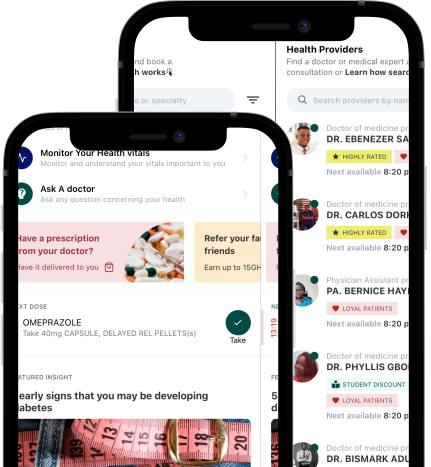
Find verified board-certified General Surgeons on DrDoGood. Compare reviews, check real-time availability, and schedule your appointment online.
All practitioners on DrDoGood are thoroughly vetted for credentials, licensing, and patient satisfaction histories.
Your doctor is only an appointment away.
Feeling unwell? Our friendly healthcare professionals are here to listen, advise, and care for you. Just open the app for quick, expert help. No stress, no fuss.