Who is a Imaging Doctor?
An Imaging Doctor — also called a Radiologist — is a medical specialist who uses X-rays, ultrasound, CT scans, and MRI machines to take pictures of the inside of your body. These pictures help other doctors find out what is wrong with you, whether it is a broken bone, a growth, or a problem with an organ. If your doctor has asked you to do a scan or an X-ray, an Imaging Doctor is the expert who reads those results and sends a report back to your doctor.
Duties and Responsibilities of a Imaging Doctor
When to See a Imaging Doctor
You should consider booking an consultation if you are experiencing any of the following symptoms or conditions:
- Your doctor has requested an X-ray, ultrasound, CT scan, or MRI
- You have a lump or swelling that needs to be checked inside
- You are experiencing unexplained pain in your chest, abdomen, or pelvis
- You have had an accident or injury and a broken bone is suspected
- You are pregnant and need a scan to check on your baby
- Your doctor suspects a tumour or growth in any part of your body
- You need a mammogram for breast cancer screening or a breast lump check
- You have had a stroke or your doctor suspects a brain problem
- You need a guided biopsy or drainage procedure
- You are monitoring a known condition such as a cyst, fibroid, or cancer
Conditions & Visit Reasons
Select a specific condition to learn more or search for specialists offering directed therapy plans:
Types of Imaging Doctor Specialists
Diagnostic Radiology
Focuses on reading and interpreting all types of medical images including X-rays, CT scans, MRI, and ultrasound to diagnose illness and injury.
Interventional Radiology
Uses imaging guidance to perform minimally invasive procedures such as draining fluid, placing stents, or taking tissue samples without open surgery.
Paediatric Radiology
Specialises in performing and interpreting imaging studies for babies, children, and teenagers, using child-friendly techniques and lower radiation doses.
Breast Imaging (Mammography)
Focuses on imaging the breast using mammograms and ultrasound to detect and diagnose breast cancer and other breast conditions.
Neuroradiology
Specialises in imaging the brain, spine, and nervous system to detect strokes, tumours, and other neurological conditions.
Nuclear Medicine
Uses small amounts of radioactive material to create images that show how organs and tissues are functioning inside the body.
Musculoskeletal Radiology
Focuses on imaging bones, joints, and muscles to diagnose fractures, arthritis, sports injuries, and other conditions affecting movement.
What to Expect at Your Appointment
When you arrive for your scan or imaging appointment, the team will ask you about your symptoms, any allergies, and whether you are pregnant, as this affects which type of scan is safest for you. Depending on the scan, you may be asked to change into a gown, remove jewellery, or drink a special liquid to help the images show up more clearly — the staff will explain everything before you begin. Most scans are painless and take between 15 and 45 minutes; the Imaging Doctor will then study your images carefully and send a written report to your referring doctor, who will discuss the results with you.
Training & Education Credentials
An Imaging Doctor completes a medical degree followed by a residency programme of four to five years specialising in radiology, during which they learn to perform and interpret all types of medical imaging. In Ghana and across West Africa, radiologists are certified by the Ghana College of Physicians and Surgeons or equivalent national medical bodies, ensuring they meet strict professional standards before practising independently.
Frequently Asked Questions
Do I need a referral before seeing an Imaging Doctor?
In most cases, yes — your general doctor, specialist, or clinic will give you a referral letter and a request form for the specific scan you need. This form tells the Imaging Doctor exactly what to look for. Some private imaging centres in Ghana allow you to walk in for basic scans like ultrasound without a referral, but it is always best to go with a doctor's request so the right scan is done.
How much does a scan cost in Ghana?
The cost depends on the type of scan — a basic ultrasound may cost between GHS 150 and GHS 400, while a CT scan or MRI can range from GHS 800 to several thousand cedis at private facilities. Government hospitals and NHIS-accredited centres may offer lower prices or partial coverage under the National Health Insurance Scheme. It is a good idea to call ahead and ask about pricing and whether your NHIS card is accepted.
Is it safe to have an X-ray or CT scan? Will the radiation harm me?
Medical imaging is generally very safe, and the benefits of getting an accurate diagnosis far outweigh the small risks from radiation. The doses used in X-rays and CT scans are carefully controlled and kept as low as possible. Pregnant women should always tell the imaging team before any scan, as some types of imaging are avoided or adjusted during pregnancy to protect the baby.
What should I bring to my imaging appointment?
Bring your referral letter or request form from your doctor, your NHIS card or insurance details, and any previous scan results or reports if you have them — this helps the Imaging Doctor compare old and new images. Wear comfortable, loose clothing and leave jewellery at home if possible. If you have been told to fast before the scan, make sure you follow those instructions carefully.
When should I seek urgent imaging care?
Go to the nearest hospital emergency unit immediately if you have a serious injury, sudden severe chest pain, difficulty breathing, sudden weakness or numbness on one side of your body, or a head injury after an accident — these situations may need an urgent scan. Do not wait for a routine appointment if your symptoms are severe or getting worse quickly. Emergency departments can arrange urgent imaging when needed.
Book a Imaging Doctor
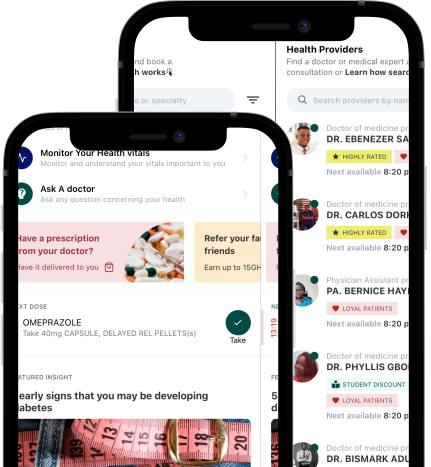
Find verified board-certified Imaging Doctors on DrDoGood. Compare reviews, check real-time availability, and schedule your appointment online.
All practitioners on DrDoGood are thoroughly vetted for credentials, licensing, and patient satisfaction histories.
Your doctor is only an appointment away.
Feeling unwell? Our friendly healthcare professionals are here to listen, advise, and care for you. Just open the app for quick, expert help. No stress, no fuss.