Who is a Speech Therapist?
A speech therapist — also called a speech-language pathologist — is a specialist who helps people who have difficulty speaking, understanding language, swallowing, or communicating clearly. They work with children who are slow to talk, adults who have had a stroke, and anyone struggling with their voice or ability to eat safely. If you or your child is having trouble speaking, being understood, or swallowing food and drinks, a speech therapist is the right person to see.
Duties and Responsibilities of a Speech Therapist
When to See a Speech Therapist
You should consider booking an consultation if you are experiencing any of the following symptoms or conditions:
- Your child is not saying any words by age 1 or not speaking in short sentences by age 2
- Your child's speech is very difficult for others to understand after age 3
- Your child stutters or repeats sounds and words frequently
- You or a family member has lost the ability to speak clearly after a stroke
- Difficulty swallowing food or drinks, or food going down the wrong way
- Persistent hoarseness or loss of voice lasting more than two weeks
- A child with autism or developmental delay who struggles to communicate
- An adult who has trouble finding words or understanding what others say
- A child who drools excessively or has trouble chewing and eating
- Anyone who feels embarrassed or withdrawn because of a speech or communication problem
Types of Speech Therapist Specialists
Paediatric Speech and Language Therapy
Focuses on helping babies, toddlers, and children who are late to talk, have unclear speech, or struggle to understand and use language.
Dysphagia (Swallowing) Therapy
Specialises in assessing and treating people who have difficulty chewing or swallowing food and liquids safely.
Neurological Rehabilitation
Helps adults recover communication and swallowing abilities after a stroke, brain injury, or conditions like Parkinson's disease.
Voice Therapy
Treats disorders of the voice, including hoarseness, loss of voice, and vocal strain in teachers, preachers, and other voice users.
Fluency and Stuttering Therapy
Provides structured therapy to help people who stutter speak more smoothly and confidently.
Augmentative and Alternative Communication (AAC)
Supports people who cannot speak by teaching them to use communication boards, devices, or sign systems.
What to Expect at Your Appointment
At your first appointment, the speech therapist will spend time talking with you — or playing with your child — to understand the communication concern and how long it has been happening. They will carry out simple, friendly assessments such as asking your child to name pictures, repeat words, or follow instructions, and they may also observe how you or your child swallows. After the assessment, they will explain what they found in plain language and discuss a therapy plan that fits your situation and schedule.
Training & Education Credentials
Speech therapists complete a bachelor's degree followed by a postgraduate degree or diploma in speech-language pathology, which includes supervised clinical placements in hospitals, schools, and community settings. In Ghana and across West Africa, qualified practitioners are registered with the relevant national health professional body and must meet continuing education requirements to maintain their licence.
Frequently Asked Questions
How much does a speech therapy session cost in Ghana?
The cost of speech therapy in Ghana varies depending on whether you visit a government hospital, a private clinic, or an NGO-supported centre. Government facilities tend to be more affordable, while private clinics may charge between GHS 150 and GHS 500 or more per session. It is worth calling ahead to ask about fees and whether a payment plan is available.
What should I bring to my child's first speech therapy appointment?
Bring any previous medical reports, school reports, or assessments your child has had, as these help the therapist understand the full picture. It is also helpful to bring a list of the words your child can say and any concerns you have noticed at home or school. If your child has a favourite toy or book, bring it along — it can help them feel comfortable during the session.
How long does speech therapy take before I see results?
The length of therapy depends on the type and severity of the communication problem. Some children make noticeable progress within a few weeks, while others may need several months of regular sessions. Your therapist will set clear goals and review progress with you regularly so you always know how things are going.
Can adults benefit from speech therapy, or is it only for children?
Speech therapy is very effective for adults, especially those recovering from a stroke, living with Parkinson's disease, or dealing with a voice problem. Adults who stutter or who have difficulty swallowing also benefit greatly from therapy. It is never too late to seek help for a communication or swallowing difficulty.
When is a speech problem an emergency and I should go to hospital immediately?
You should go to the nearest hospital emergency unit immediately if someone suddenly loses the ability to speak, has slurred speech that came on without warning, or is choking and cannot swallow safely. These can be signs of a stroke or another serious medical condition that needs urgent treatment. Do not wait for a speech therapy appointment — go straight to the hospital.
Book a Speech Therapist
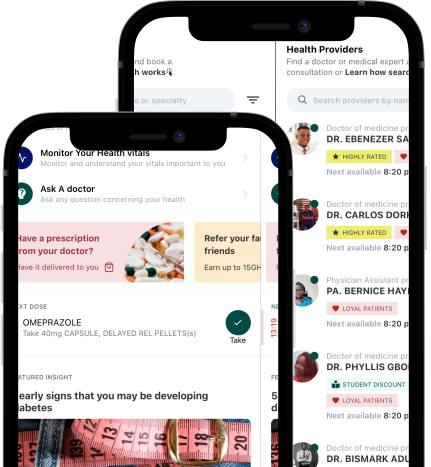
Find verified board-certified Speech Therapists on DrDoGood. Compare reviews, check real-time availability, and schedule your appointment online.
All practitioners on DrDoGood are thoroughly vetted for credentials, licensing, and patient satisfaction histories.
Your doctor is only an appointment away.
Feeling unwell? Our friendly healthcare professionals are here to listen, advise, and care for you. Just open the app for quick, expert help. No stress, no fuss.