Verified Health Resource

Understanding Actinic Keratosis

Actinic keratosis is a rough, scaly patch that forms on the skin after many years of being in the sun. It is common in people who spend a lot of time outdoors, especially in sunny countries like Ghana and across West Africa. It is important to see a doctor if you notice these patches, because without treatment they can sometimes turn into skin cancer.

Common Symptoms / Concerns for Actinic Keratosis

Rough or scaly patch on the skin
Itching or burning feeling on a skin patch
A dry, crusty spot that does not heal
Skin that feels hard or wart-like in one area
A flat or slightly raised patch that is pink, red, or brownish
Tenderness or soreness when you touch a skin patch
A patch that bleeds easily when rubbed or scratched
Skin that feels tight or stiff in a small area
A patch that keeps coming back after it seems to go away

When to Seek Professional Care

Book an evaluation with a healthcare provider immediately if you experience or present with:

  • A skin patch that bleeds without being scratched or bumped
  • A rough patch that keeps growing larger over a few weeks
  • A sore or patch that does not heal after one month
  • A patch that becomes very painful or tender to touch
  • A skin spot that changes colour quickly or turns very dark
  • A crusty patch that develops a deep sore or open wound in the centre
  • Any new lump or thickening that appears on or around the patch

What to Expect During Your Medical Consultation

When you visit the doctor, they will ask you some simple questions — such as how long you have had the patch, whether it has changed, and how much time you spend in the sun. The doctor will then look closely at your skin, sometimes using a small magnifying tool to get a better view. In some cases, they may take a tiny sample of skin (called a biopsy) to check it more carefully, but this is a quick and straightforward procedure — there is nothing to worry about.

Medical Divisions Vetted for Actinic Keratosis

Our platform supports multiple clinical specialties capable of providing consultations for this visit type:

Related Conditions

Conditions commonly associated with Actinic Keratosis consultations:

Skin acne

Also known as: skin problem

Roseline

Roseline Osazuwa

300

per visit

Prime: ₵270

Accra5(2)
Highly Rated♥ Loyal PatientsVirtual

Dr. Roseline Osazuwa is an experienced Dermatologist who holds a MBBS from University of Portharcort  and a MScPD in Dermatology from Cardiff University with over 10 years experience treating both general and dermatology conditions. Dr. Roseline specializes in dermatology and Aesthetic Mediscine. She is an expert in the treatment of skin,hair and nail diseases including acne, eczema,hairloss, paediatric dermatology among others. She does aesthetic procedures such as Electrocautery, chemical peel, micro needling among others.  She is a member of the American Association of Aesthetic Medicine. 

Next available — thu, Jul 23

Frequently Asked Questions

What causes actinic keratosis?

Actinic keratosis is caused by many years of exposure to strong sunlight. The sun's ultraviolet (UV) rays slowly damage the skin over time, causing rough, scaly patches to form. People who spend a lot of time outdoors — such as farmers, fishermen, and market traders — are at higher risk. The more sun exposure you have had over your lifetime, the greater your chance of developing it.

Is actinic keratosis dangerous or can it turn into cancer?

Actinic keratosis is not cancer, but it is considered a warning sign that should not be ignored. A small number of these patches can turn into a type of skin cancer called squamous cell carcinoma if left untreated. That is why it is important to see a doctor as soon as you notice a rough, scaly, or crusty patch on your skin that does not go away. Treating it early keeps you safe.

Can I treat actinic keratosis at home with herbs or local remedies?

Home remedies and herbal treatments have not been proven to remove actinic keratosis safely. Some remedies may irritate the skin and make things worse. It is best to see a doctor or skin specialist who can confirm the diagnosis and offer a treatment that is known to work. Do not try to scratch, cut, or burn the patch yourself, as this can cause infection or scarring.

What treatments are available for actinic keratosis?

A doctor can treat actinic keratosis in several ways depending on how many patches you have and how severe they are. Common options include freezing the patch with liquid nitrogen (cryotherapy), applying a special cream prescribed by a doctor, or a minor procedure to remove the affected skin. Your doctor will choose the best option for you. Most treatments are straightforward and do not require a hospital stay.

Is actinic keratosis contagious? Can I pass it to my family?

No, actinic keratosis is not contagious at all. You cannot spread it to your family, friends, or anyone else through touch or close contact. It is caused by sun damage to your own skin over many years, not by a germ or infection. You do not need to avoid contact with others because of this condition.

Schedule Consultations

Get connected with local doctors. Instantly schedule appointments for Actinic Keratosis on our HIPAA-compliant, telehealth-enabled platform.

Clinical Divisions
Clinical Governance

Our guides are reviewed by internal medical advisory boards to uphold patient guidelines and reference certified therapies.

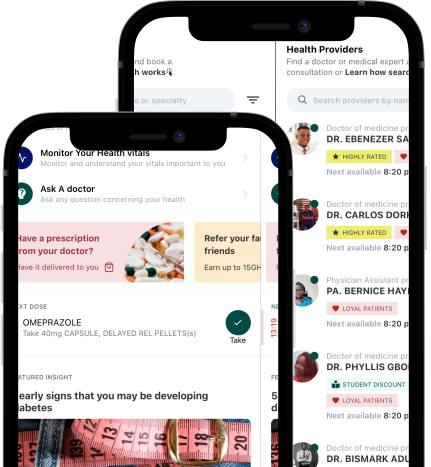
Your doctor is only an appointment away.

Feeling unwell? Our friendly healthcare professionals are here to listen, advise, and care for you. Just open the app for quick, expert help. No stress, no fuss.