Atta Junior Owusu
₵150
per visit
Prime: ₵135
Kumasi5(1)
Today Highly RatedVirtual
Obstetrician gynecologist passionate and dedicated to women’s reproductive health
Next available — mon, Oct 19

A miscarriage is the loss of a pregnancy before 20 weeks, and it is more common than many people realise — you are not alone. It can be a very difficult and emotional experience, and it is completely understandable to feel sad, confused, or frightened. Seeing a doctor is important to make sure your body is safe and healing well, and to get the care and support you deserve.
Book an evaluation with a healthcare provider immediately if you experience or present with:
When you visit the doctor, they will ask you some gentle questions — such as the date of your last period, what symptoms you have been experiencing, and your history of past pregnancies. They will then examine your abdomen and may check your cervix to understand what is happening. They may also send you for an ultrasound scan and some blood tests to make sure you are safe and to guide the best care for you.
Our platform supports multiple clinical specialties capable of providing consultations for this visit type:
Clinicians available for miscarriage consultations.
Conditions commonly associated with Miscarriage consultations:
Sexually transmitted disease (STD)
Also known as: STD, sexually transmitted disease
Vaginal Discharge & STI
₵150
per visit
Prime: ₵135
Obstetrician gynecologist passionate and dedicated to women’s reproductive health
Next available — mon, Oct 19
₵150
per visit
Prime: ₵135
I stay at Achimota Mile 7 , married with 2 kid, completed med school in 2020, currently working at ugmc at Obs and gynae
Next available — mon, Oct 19
₵200
per visit
Prime: ₵180
•Member of Ghana College of Obstetricians and Gynecologists •Member of West Africa College of Obstetricians and Gynecologist
Next available — mon, Oct 19
₵150
per visit
Prime: ₵135
A Senior Specialist Obstetrician & Gynaecologist with a passion for helping women achieve reproductive health and safely deliver their dream babies 👶🏽 Find me on tiktok @TheGynaepreneur!
Next available — mon, Oct 19
₵150
per visit
Prime: ₵135
I’m a medical doctor working in obstetrics and gynecology. My passion is women and all things related to women. Im married with a child for now and currently working at University of Ghana Medical Centre
Next available — mon, Oct 19
Most miscarriages happen because the baby was not developing normally, often due to problems with the chromosomes (the genetic material). Other causes can include health conditions in the mother, such as diabetes, thyroid problems, or infections. In many cases, doctors are not able to find a specific cause, and this is very common.
In most cases, a miscarriage cannot be prevented because it is caused by problems with how the baby was developing. However, you can support a healthy pregnancy by attending antenatal care early, eating well, avoiding alcohol and smoking, and managing any existing health conditions. If you have had more than one miscarriage, your doctor can run tests to check for treatable causes.
No, a miscarriage is not the woman's fault. It is not caused by something you did, said, or thought. Miscarriages are almost always caused by natural problems with the pregnancy that are beyond anyone's control. It is important to be kind to yourself and seek emotional support from loved ones or a health professional.
Treatment depends on how far along the pregnancy was and how your body is responding. Sometimes the body passes the pregnancy on its own without any treatment needed. A doctor may offer medicine to help the process along, or a small procedure to safely remove the remaining tissue. Your health provider will discuss the best option for you and make sure you are comfortable and safe.
Yes, most women are able to get pregnant again after a miscarriage. Having one miscarriage does not mean it will happen again — the majority of women go on to have healthy pregnancies. Your doctor can advise you on when it is safe to try again, which is usually after your body has had time to heal.
Get connected with local doctors. Instantly schedule appointments for Miscarriage on our HIPAA-compliant, telehealth-enabled platform.
Our guides are reviewed by internal medical advisory boards to uphold patient guidelines and reference certified therapies.
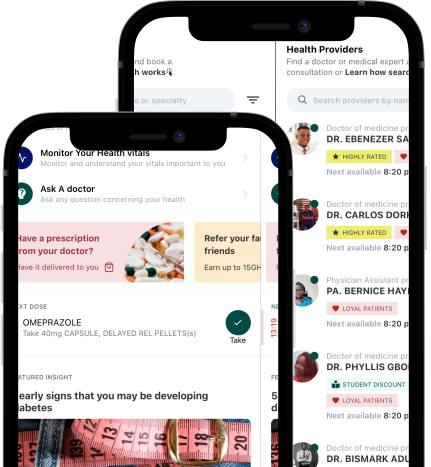
Feeling unwell? Our friendly healthcare professionals are here to listen, advise, and care for you. Just open the app for quick, expert help. No stress, no fuss.