Understanding Opioid Maintenance Therapy
Opioid Maintenance Therapy (OMT) is a medical treatment that helps people who have become dependent on opioids — such as strong pain medicines or heroin — to stop using them safely and live a healthier life. A doctor prescribes a controlled medicine that reduces cravings and withdrawal discomfort, making it easier to recover without suffering. If you or someone you know is struggling to stop using opioids, seeing a doctor for OMT is a safe and effective first step.
Common Symptoms / Concerns for Opioid Maintenance Therapy
When to Seek Professional Care
Book an evaluation with a healthcare provider immediately if you experience or present with:
- You have taken a very large amount of opioids and feel drowsy, confused, or cannot be woken up
- Your breathing is very slow, shallow, or has stopped
- You are experiencing severe chest pain or your heart is beating very fast
- You have had a seizure (convulsion) or lost consciousness
- You are having thoughts of harming yourself or ending your life
- You have not been able to eat, drink, or keep fluids down for more than a day due to withdrawal
- You notice signs of infection at an injection site, such as redness, swelling, or pus
- A child or someone else has accidentally taken your opioid medicine
What to Expect During Your Medical Consultation
At your first appointment, the doctor will ask you some questions about your health history, how long you have been using opioids, and how they have affected your daily life — there is no need to feel ashamed, as the doctor is there to help you. They may also do a brief physical check-up and possibly request a blood or urine test to understand your health better. After this, they will explain your treatment options and, if suitable, prescribe a medicine to help you manage cravings and feel more stable.
Medical Divisions Vetted for Opioid Maintenance Therapy
Our platform supports multiple clinical specialties capable of providing consultations for this visit type:
Mental Health Doctor
Clinicians available for opioid maintenance therapy consultations.
Frequently Asked Questions
What is Opioid Maintenance Therapy?
Opioid Maintenance Therapy is a medical treatment for people who are dependent on opioids, such as strong pain medicines or heroin. A doctor prescribes a safer, controlled medicine — such as methadone or buprenorphine — that reduces cravings and prevents withdrawal symptoms. This allows you to stabilise your health and work towards recovery without the dangers of street drugs.
How does Opioid Maintenance Therapy work?
The medicines used in this therapy work by acting on the same parts of the brain as opioids, but in a much safer and more controlled way. They reduce the urge to use opioids and prevent the painful symptoms that come when you stop suddenly. You take the medicine regularly as prescribed by your doctor, which helps you feel stable enough to focus on your health and daily life.
Is Opioid Maintenance Therapy safe?
Yes, when taken as prescribed by a doctor, Opioid Maintenance Therapy is safe and has helped many people around the world recover from opioid dependence. The medicines used are approved and have been studied for many years. Your doctor will monitor you regularly to make sure the treatment is working well and adjust your dose if needed.
How long will I need to be on this treatment?
The length of treatment is different for each person and depends on your health, your progress, and what works best for you. Some people stay on the medicine for a few months, while others may need it for several years — both are completely normal. Your doctor will work with you over time to decide when and how to safely reduce or stop the medicine.
How can I access Opioid Maintenance Therapy in Ghana or West Africa?
You can start by visiting a government hospital, a mental health clinic, or a substance use treatment centre in your area and asking to speak with a doctor about opioid dependence treatment. Some facilities in Ghana and across West Africa offer this service, and a doctor can refer you to the right place if it is not available where you first go. You do not need to be in crisis to ask for help — reaching out early gives you the best chance of a good recovery.
Schedule Consultations
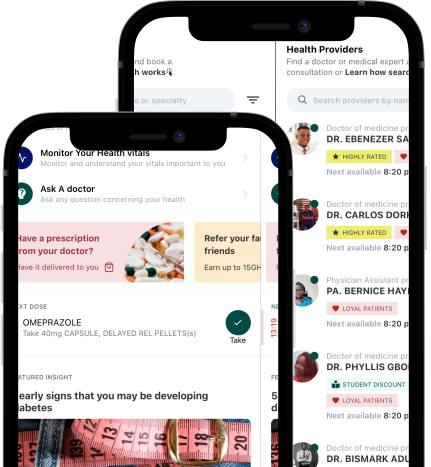
Get connected with local doctors. Instantly schedule appointments for Opioid Maintenance Therapy on our HIPAA-compliant, telehealth-enabled platform.
Our guides are reviewed by internal medical advisory boards to uphold patient guidelines and reference certified therapies.
Your doctor is only an appointment away.
Feeling unwell? Our friendly healthcare professionals are here to listen, advise, and care for you. Just open the app for quick, expert help. No stress, no fuss.