Verified Health Resource

Understanding Psoriasis

Psoriasis is a long-term skin condition where the body's immune system causes skin cells to grow too quickly, leading to thick, red, and scaly patches that can appear anywhere on the body. It is not contagious, but it can be uncomfortable and affect your confidence. Seeing a doctor can help you manage the symptoms and find the right treatment to keep your skin healthy.

Common Symptoms / Concerns for Psoriasis

Red, raised patches of skin covered with silvery-white scales
Dry, cracked skin that may bleed
Itching, burning, or soreness on the skin
Thickened, pitted, or ridged nails
Swollen and stiff joints
Skin that flakes off in large pieces
Patches that get worse after scratching or injury
Redness and scaling around the scalp and hairline
Discomfort or pain in affected skin areas
Skin that feels tight or uncomfortable

When to Seek Professional Care

Book an evaluation with a healthcare provider immediately if you experience or present with:

  • Skin patches spread rapidly and cover large areas of your body
  • Severe pain, swelling, or stiffness in your joints that limits movement
  • Skin becomes very red, hot, and painful all over — not just in patches
  • You develop a high fever alongside worsening skin symptoms
  • The affected skin becomes infected — with pus, increased warmth, or a bad smell
  • Your condition does not improve after several weeks of treatment
  • You feel very distressed, anxious, or depressed because of your skin condition
  • Skin peels off in sheets and you feel generally unwell

What to Expect During Your Medical Consultation

When you visit the doctor for psoriasis, they will ask you about your symptoms — such as when the patches started, where they appear, and anything that seems to make them worse. The doctor will then gently examine your skin, and may also check your nails and joints, as psoriasis can sometimes affect these areas too. In most cases, no special tests are needed — the doctor can usually tell what it is just by looking at your skin and listening to you.

Medical Divisions Vetted for Psoriasis

Our platform supports multiple clinical specialties capable of providing consultations for this visit type:

Related Conditions

Conditions commonly associated with Psoriasis consultations:

Skin acne

Also known as: skin problem

Roseline

Roseline Osazuwa

300

per visit

Prime: ₵270

Accra5(2)
Highly Rated♥ Loyal PatientsVirtual

Dr. Roseline Osazuwa is an experienced Dermatologist who holds a MBBS from University of Portharcort  and a MScPD in Dermatology from Cardiff University with over 10 years experience treating both general and dermatology conditions. Dr. Roseline specializes in dermatology and Aesthetic Mediscine. She is an expert in the treatment of skin,hair and nail diseases including acne, eczema,hairloss, paediatric dermatology among others. She does aesthetic procedures such as Electrocautery, chemical peel, micro needling among others.  She is a member of the American Association of Aesthetic Medicine. 

Next available — thu, Jul 23

Frequently Asked Questions

What causes psoriasis?

Psoriasis happens when the body's immune system becomes overactive and causes skin cells to grow too fast. The extra skin cells pile up on the surface, forming the thick, scaly patches you see. It is not caused by poor hygiene and you cannot catch it from another person. Things like stress, certain infections, or some medicines can trigger or worsen it.

Is psoriasis contagious? Can I spread it to my family?

No, psoriasis is not contagious at all. You cannot spread it to your family, friends, or anyone else through touch, sharing food, or any other contact. It is a condition that comes from inside the body, not from germs or infection. You can live normally with your family without any fear of spreading it.

Can I treat psoriasis at home with local herbs or remedies?

Some people find that keeping the skin moisturised with shea butter or coconut oil helps reduce dryness and discomfort. However, home remedies alone are usually not enough to control psoriasis, especially if the patches are spreading or very itchy. It is important to see a doctor so you can get the right treatment. Using unproven herbal mixtures on broken or inflamed skin can sometimes make things worse.

What treatments are available for psoriasis in Ghana?

Doctors in Ghana can prescribe creams and ointments that reduce the redness, itching, and scaling on your skin. For more severe cases, there are medicines you take by mouth or injections that calm the immune system. Your doctor will choose the best option based on how much of your skin is affected. Regular follow-up visits are important to make sure the treatment is working.

Can psoriasis be prevented or cured permanently?

There is currently no permanent cure for psoriasis, but it can be managed very well with the right treatment. Many people go through periods where their skin clears up almost completely. You can reduce flare-ups by managing stress, avoiding triggers like alcohol and smoking, and keeping your skin moisturised. Working closely with your doctor gives you the best chance of keeping it under control.

Schedule Consultations

Get connected with local doctors. Instantly schedule appointments for Psoriasis on our HIPAA-compliant, telehealth-enabled platform.

Clinical Divisions
Clinical Governance

Our guides are reviewed by internal medical advisory boards to uphold patient guidelines and reference certified therapies.

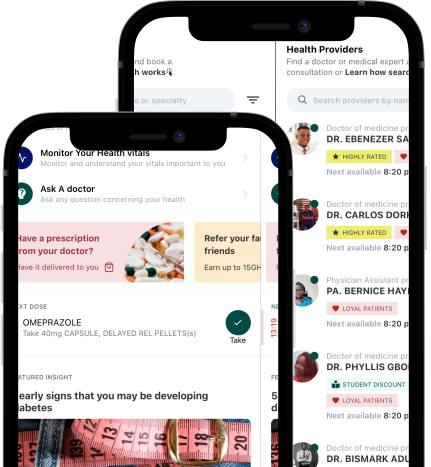
Your doctor is only an appointment away.

Feeling unwell? Our friendly healthcare professionals are here to listen, advise, and care for you. Just open the app for quick, expert help. No stress, no fuss.