Verified Health Resource

Understanding Warts

Warts are small, rough growths that appear on the skin and are caused by a viral infection called the human papillomavirus (HPV). They can show up on your hands, feet, face, or other parts of the body, and while they are usually harmless, many people find them uncomfortable or embarrassing. A doctor can help you get rid of warts safely and make sure the growth on your skin is nothing more serious.

Common Symptoms / Concerns for Warts

Small rough bump on the skin
Skin growth that feels hard to the touch
Tiny black dots in the centre of the growth
Flat, smooth patch of thickened skin
Cluster of small bumps growing close together
Skin growth on the sole of the foot that hurts when you walk
Rough, cauliflower-like lump on the fingers or hands
Skin growth that slowly gets bigger over time
Itching or mild discomfort around the affected area
Skin growth that bleeds easily when scratched or bumped

When to Seek Professional Care

Book an evaluation with a healthcare provider immediately if you experience or present with:

  • Wart that bleeds heavily and does not stop
  • Painful wart on the bottom of the foot making it hard to walk
  • Wart that is growing very quickly or changing in appearance
  • Wart on the face, genitals, or a sensitive area of the body
  • Skin growth that looks different from a normal wart — such as being very dark, uneven, or having an unusual shape
  • Wart that keeps coming back after treatment
  • Signs of infection around the wart, such as swelling, redness, warmth, or pus
  • Child with multiple warts spreading to different parts of the body

What to Expect During Your Medical Consultation

When you visit the doctor for warts, they will ask you how long you have had the growth, whether it is painful, and if it has been spreading. The doctor will look closely at the affected area to confirm it is a wart and check that it is not something else that needs different treatment. Depending on the size and location of the wart, they may apply a special cream or liquid to remove it, or refer you for a simple procedure — all of which are safe and straightforward.

Medical Divisions Vetted for Warts

Our platform supports multiple clinical specialties capable of providing consultations for this visit type:

Related Conditions

Conditions commonly associated with Warts consultations:

Skin acne

Also known as: skin problem

Roseline

Roseline Osazuwa

300

per visit

Prime: ₵270

Accra5(2)
Highly Rated♥ Loyal PatientsVirtual

Dr. Roseline Osazuwa is an experienced Dermatologist who holds a MBBS from University of Portharcort  and a MScPD in Dermatology from Cardiff University with over 10 years experience treating both general and dermatology conditions. Dr. Roseline specializes in dermatology and Aesthetic Mediscine. She is an expert in the treatment of skin,hair and nail diseases including acne, eczema,hairloss, paediatric dermatology among others. She does aesthetic procedures such as Electrocautery, chemical peel, micro needling among others.  She is a member of the American Association of Aesthetic Medicine. 

Next available — thu, Jul 23

Frequently Asked Questions

What causes warts?

Warts are caused by a virus called the Human Papillomavirus (HPV). This virus enters the skin through small cuts or breaks and causes the skin cells to grow quickly, forming a wart. Anyone can get warts, but children and people with a weak immune system are more likely to be affected.

Are warts contagious? Can I spread them to others?

Yes, warts are contagious and can spread from person to person through direct skin contact. You can also spread warts to other parts of your own body if you touch a wart and then touch another area of skin. Sharing towels, shoes, or other personal items with someone who has warts can also spread the virus.

Can I treat warts at home, or do I need to see a doctor?

Some small warts may go away on their own over time without any treatment. You can try over-the-counter treatments like salicylic acid, which is available at most pharmacies. However, you should see a doctor if the wart is painful, growing quickly, on your face or genitals, or if home treatments have not worked after a few weeks.

What treatment options are available for warts?

A doctor can treat warts in several ways, including freezing them off with liquid nitrogen (cryotherapy), applying special medicines to remove them, or cutting them out in a minor procedure. Some warts may need more than one treatment before they fully go away. Your doctor will recommend the best option based on the size and location of your wart.

How can I stop warts from spreading to other people or other parts of my body?

To prevent warts from spreading, avoid touching your warts and wash your hands regularly. Do not share personal items like towels, socks, or shoes with others. Cover your warts with a bandage, and avoid walking barefoot in public places like changing rooms or communal bathrooms.

Schedule Consultations

Get connected with local doctors. Instantly schedule appointments for Warts on our HIPAA-compliant, telehealth-enabled platform.

Clinical Divisions
Clinical Governance

Our guides are reviewed by internal medical advisory boards to uphold patient guidelines and reference certified therapies.

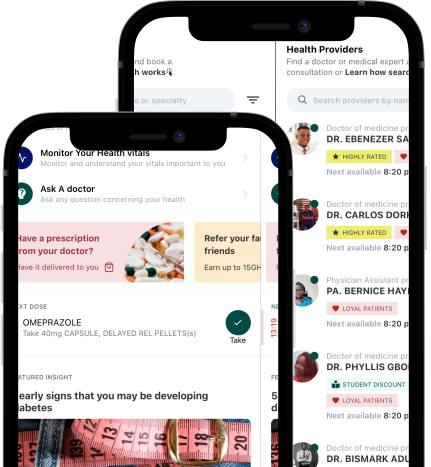
Your doctor is only an appointment away.

Feeling unwell? Our friendly healthcare professionals are here to listen, advise, and care for you. Just open the app for quick, expert help. No stress, no fuss.