Who is a Cancer Doctor?
A Cancer Doctor, also called an Oncologist, is a specialist who diagnoses and treats cancer — a condition where abnormal cells in the body grow out of control. They work with patients to find the best treatment plan, which may include medicines, radiation, or surgery, depending on the type and stage of cancer. If you or a loved one has been told there may be cancer, or if you have unexplained lumps, unusual bleeding, or rapid weight loss, an Oncologist is the right specialist to see.
Duties and Responsibilities of a Cancer Doctor
When to See a Cancer Doctor
You should consider booking an consultation if you are experiencing any of the following symptoms or conditions:
- A lump or swelling anywhere on the body that does not go away
- Unexplained weight loss over a short period of time
- Persistent cough or hoarseness that lasts more than 3 weeks
- Unusual bleeding or discharge from any part of the body
- A sore or wound that refuses to heal
- Changes in the size, shape, or colour of a mole or skin patch
- Difficulty swallowing or persistent indigestion
- Blood in urine or stool without a clear cause
- Extreme tiredness that does not improve with rest
- A doctor or test result has suggested cancer or a suspicious growth
Conditions & Visit Reasons
Select a specific condition to learn more or search for specialists offering directed therapy plans:
Types of Cancer Doctor Specialists
Medical Oncology
Focuses on treating cancer using medicines such as chemotherapy, targeted therapy, and immunotherapy.
Radiation Oncology
Uses high-energy radiation beams to destroy cancer cells and shrink tumours.
Surgical Oncology
Specialises in removing tumours and cancerous tissue through surgery.
Gynaecologic Oncology
Treats cancers affecting women's reproductive organs, such as cervical, ovarian, and uterine cancer.
Paediatric Oncology
Diagnoses and treats cancers in children and teenagers.
Haematologic Oncology
Focuses on blood cancers such as leukaemia, lymphoma, and myeloma.
Palliative Oncology
Provides comfort-focused care to manage pain and symptoms for patients with advanced or incurable cancer.
What to Expect at Your Appointment
At your first visit, the Cancer Doctor will ask you about your symptoms, how long you have had them, your family health history, and any tests you have already done. They will examine you and may request blood tests, scans (such as an ultrasound or CT scan), or a biopsy — a small sample of tissue — to understand what is happening in your body. The doctor will explain everything clearly and work with you to decide on the next steps, so you do not have to face this alone.
Training & Education Credentials
An Oncologist completes a medical degree (MBChB or MBBS) followed by several years of specialist training in internal medicine and then oncology, typically earning a fellowship or postgraduate qualification such as FWACP, FGCP, or equivalent board certification. In Ghana and West Africa, specialists are certified through bodies such as the West African College of Physicians or the Ghana College of Physicians and Surgeons.
Frequently Asked Questions
How much does it cost to see a Cancer Doctor in Ghana?
The cost of seeing an Oncologist in Ghana varies depending on whether you visit a government hospital, a private clinic, or a specialist cancer centre. At public hospitals like Korle Bu Teaching Hospital, fees may be lower and partly covered by the National Health Insurance Scheme (NHIS). Private consultations can range from GHS 300 to GHS 1,000 or more, and additional costs for tests, scans, or treatment will apply. It is best to call ahead and ask about fees before your visit.
What should I bring to my first appointment with a Cancer Doctor?
Bring any previous test results, scan reports, or letters from other doctors you have already seen. Also bring your NHIS card if you have one, a list of any medicines you are currently taking, and a trusted family member or friend for support. Writing down your symptoms and questions beforehand will help you make the most of your appointment.
How do I prepare for a cancer consultation?
Try to note down when your symptoms started, how they have changed, and anything that makes them better or worse. If you have had any previous hospital visits, blood tests, or scans related to your symptoms, gather those documents. Eating and drinking normally before the appointment is usually fine unless the doctor has given you specific instructions.
When should I go to the emergency room instead of waiting for a cancer appointment?
Go to the emergency room immediately if you experience severe difficulty breathing, coughing up large amounts of blood, sudden confusion or loss of consciousness, or extreme pain that cannot be controlled. These can be signs of a serious complication that needs urgent care. Do not wait for a scheduled appointment if you feel your condition is getting rapidly worse.
Does a cancer diagnosis always mean I will need chemotherapy?
No — not every cancer is treated with chemotherapy. The treatment depends on the type of cancer, where it is in the body, and how early it was found. Some cancers are treated with surgery alone, others with radiation, and some with a combination of treatments. Your Cancer Doctor will explain all the options available to you and help you choose the best path forward.
Book a Cancer Doctor
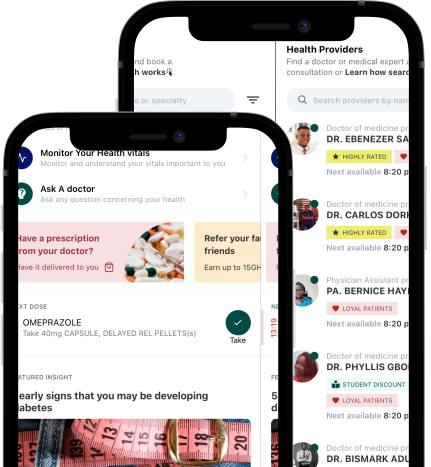
Find verified board-certified Cancer Doctors on DrDoGood. Compare reviews, check real-time availability, and schedule your appointment online.
All practitioners on DrDoGood are thoroughly vetted for credentials, licensing, and patient satisfaction histories.
Your doctor is only an appointment away.
Feeling unwell? Our friendly healthcare professionals are here to listen, advise, and care for you. Just open the app for quick, expert help. No stress, no fuss.