Who is a Emergency Doctor?
An Emergency Doctor is a medical specialist who works in the accident and emergency (A&E) department, providing immediate care for sudden, serious, or life-threatening conditions. They are trained to quickly assess and stabilise patients — from road accident injuries and severe infections to heart attacks and breathing difficulties. If you or someone you know has a sudden health crisis that cannot wait for a regular clinic appointment, an Emergency Doctor is the right person to see.
Duties and Responsibilities of a Emergency Doctor
When to See a Emergency Doctor
You should consider booking an consultation if you are experiencing any of the following symptoms or conditions:
- Sudden chest pain or tightness that does not go away
- Difficulty breathing or shortness of breath
- Loss of consciousness or sudden collapse
- Severe bleeding that cannot be stopped
- Signs of stroke — sudden face drooping, arm weakness, or slurred speech
- High fever with confusion, stiff neck, or a rash
- Serious injuries from a road accident, fall, or assault
- Suspected poisoning or drug overdose
- Severe allergic reaction — swelling of the face, lips, or throat
- Seizures or convulsions, especially for the first time
Conditions & Visit Reasons
Select a specific condition to learn more or search for specialists offering directed therapy plans:
Conditions Treated
Common conditions that a Emergency Doctor can diagnose, manage, or treat:
Fever
Also known as: elevated temperature, febrile illness, feverish
Types of Emergency Doctor Specialists
Paediatric Emergency Medicine
Focuses on emergency care for infants, children, and teenagers with urgent or life-threatening conditions.
Trauma Surgery
Specialises in the immediate surgical management of severe physical injuries from accidents or violence.
Toxicology
Deals with poisoning, drug overdoses, and exposure to harmful substances requiring emergency treatment.
Pre-hospital Emergency Medicine
Covers emergency care delivered outside the hospital, such as in ambulances or at accident scenes.
Disaster and Mass Casualty Medicine
Focuses on organising and delivering emergency care during large-scale disasters or mass casualty events.
What to Expect at Your Appointment
When you arrive at the emergency department, a nurse or doctor will quickly check how serious your condition is — this is called triage — so that the most urgent cases are seen first. The Emergency Doctor will ask about your symptoms, how they started, and any medicines you take, then carry out a focused examination and order any urgent tests such as blood work or X-rays. The team's goal is to stabilise you, relieve your pain or distress, and decide on the best next step, whether that is treatment and discharge or admission to the hospital.
Training & Education Credentials
Emergency Doctors complete a medical degree followed by postgraduate residency training in emergency medicine, which typically takes four to six years in total. In Ghana and across West Africa, practitioners may hold fellowship qualifications from bodies such as the West African College of Surgeons (WACS) or the Ghana College of Physicians and Surgeons, confirming their specialist competence in emergency care.
Frequently Asked Questions
How much does a visit to the emergency department cost in Ghana?
Costs vary depending on whether you attend a government hospital or a private facility. At public hospitals, the National Health Insurance Scheme (NHIS) covers many emergency services, so registered members may pay little or nothing. Private emergency departments charge higher fees, so it is a good idea to carry your NHIS card and any cash or mobile money in case of additional charges.
What should I bring with me to the emergency department?
Bring your NHIS card or any health insurance documents, a valid ID, and a list of any medicines you are currently taking. If you have a known medical condition such as diabetes, hypertension, or asthma, bring any relevant medical records or previous test results if they are available. Do not delay going to the emergency department just to gather documents — your health comes first.
How do I know if my situation is a true emergency or if I can wait to see a regular doctor?
Go to the emergency department immediately if you have chest pain, difficulty breathing, sudden weakness or confusion, uncontrolled bleeding, or any symptom that is rapidly getting worse. For milder problems — such as a mild fever, a small cut, or a common cold — a clinic or pharmacy visit is usually more appropriate and faster. When in doubt, it is always safer to go to the emergency department and let the medical team decide.
Why do I sometimes wait a long time in the emergency department even when I feel very sick?
Emergency departments use a system called triage to see the most critically ill patients first, regardless of arrival time. If you are waiting, it means the team has assessed you and determined that your condition is stable enough to wait safely while more life-threatening cases are treated. Please let a nurse know immediately if your symptoms suddenly get worse while you are waiting.
Can children be treated in the emergency department, and is there a separate area for them?
Yes, Emergency Doctors treat patients of all ages, including newborns and children. Larger hospitals in Ghana, such as Korle Bu Teaching Hospital and Komfo Anokye Teaching Hospital, have dedicated paediatric emergency areas with staff trained in children's emergency care. If your child has a high fever, difficulty breathing, seizures, or a serious injury, take them to the nearest emergency department without delay.
Book a Emergency Doctor
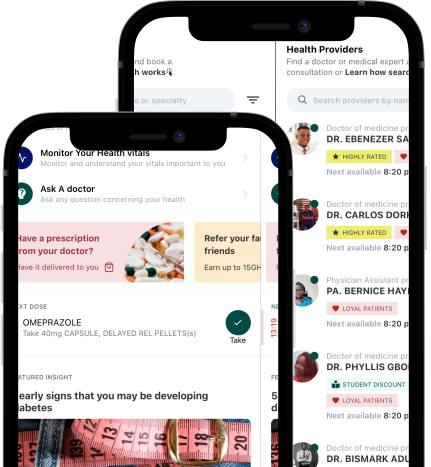
Find verified board-certified Emergency Doctors on DrDoGood. Compare reviews, check real-time availability, and schedule your appointment online.
All practitioners on DrDoGood are thoroughly vetted for credentials, licensing, and patient satisfaction histories.
Your doctor is only an appointment away.
Feeling unwell? Our friendly healthcare professionals are here to listen, advise, and care for you. Just open the app for quick, expert help. No stress, no fuss.