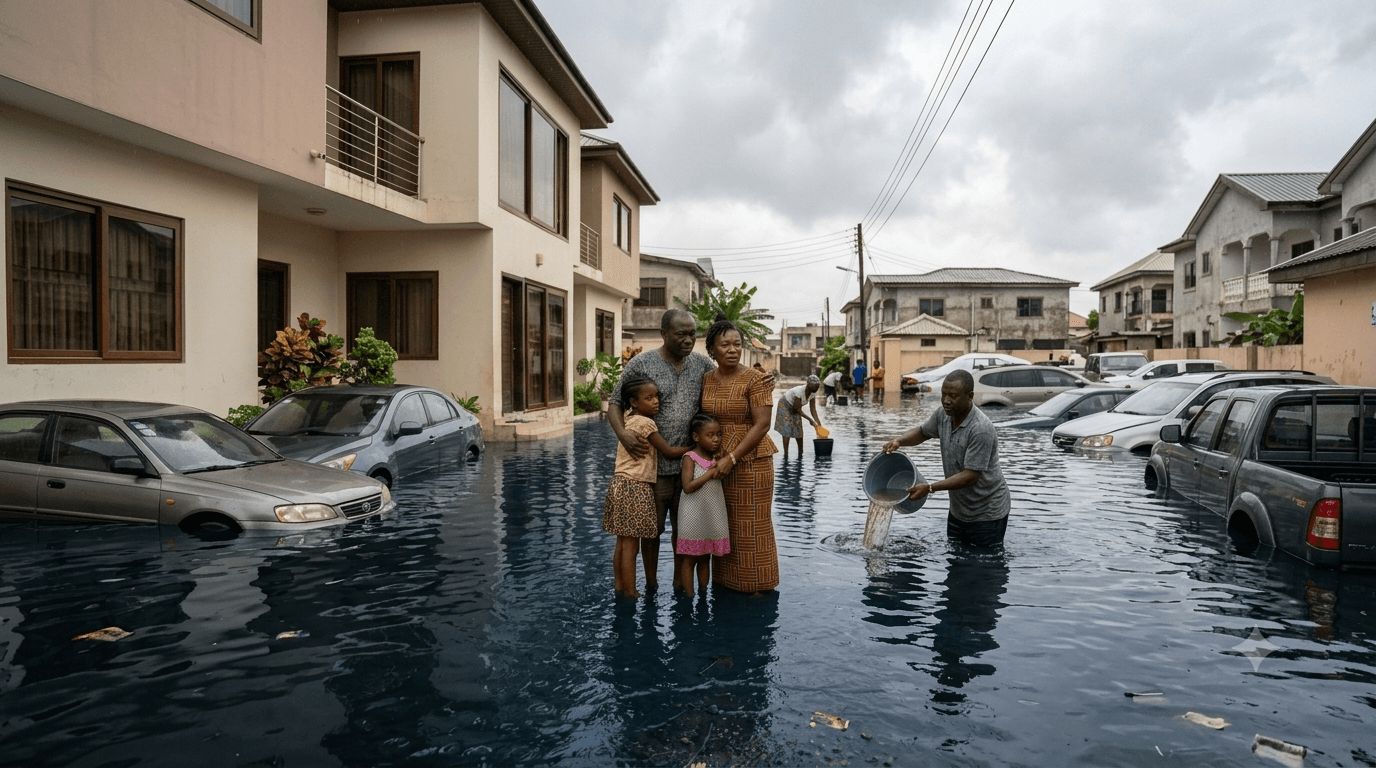


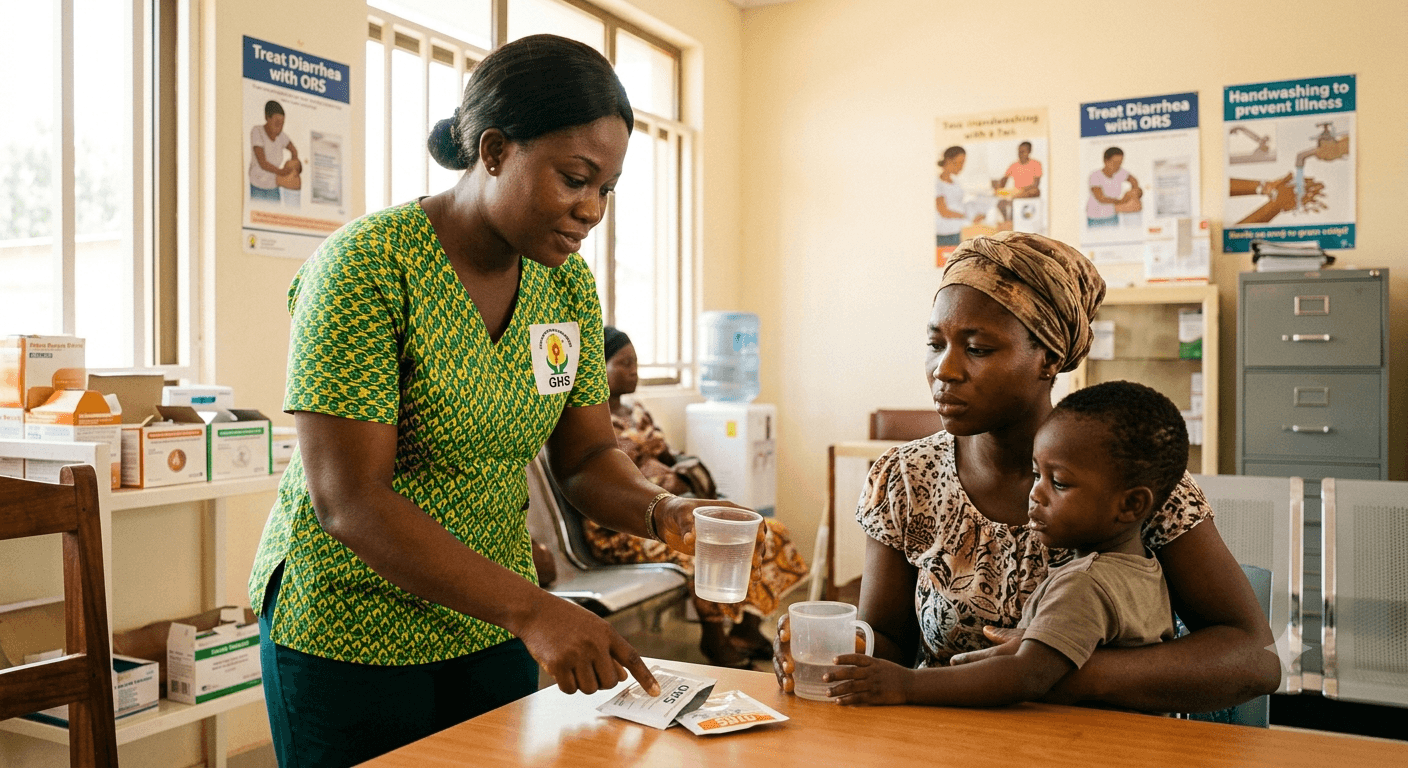
Cholera is a potentially life-threatening bacterial infection of the small intestine, caused by Vibrio cholerae, that produces sudden-onset, profuse watery diarrhoea, vomiting, and rapid fluid loss, often severe enough to cause life-threatening dehydration within hours. Right now, cholera is not a distant textbook risk for Accra residents. Following the recent devastating floods across Greater Accra, the Ghana Health Service (GHS) has issued an urgent public health alert, and the National Health Insurance Authority (NHIA) has announced free NHIS registration for all flood-affected persons and their dependants, a clear signal that authorities view this as a live, imminent threat.
If you live in or near flood-affected communities, or you have been in contact with stagnant water, this article gives you the information you need.
How Cholera Spreads After Flooding in Accra
Cholera does not fall from the sky with rain. But flooding creates the perfect chain of contamination. The GHS Director-General, Prof. Samuel Kaba Akoriyea, has explained it plainly in the Service's rainy-season alert: when floodwater accumulates and surges, it carries contaminated faecal matter directly into drinking water sources, open wells, and domestic water storage containers. What was safe water yesterday can become a vehicle for Vibrio cholerae today.
Here is how that chain works in practice across Accra's flood-affected communities:
Contaminated water sources. Floodwater mixes with the contents of burst sewers, overflowing pit latrines, and open defecation sites. When this water enters boreholes, community taps, or household storage, anyone who drinks it, even in small quantities, is exposed.
Stagnant water. Pockets of standing water in compounds, gutters, and low-lying areas become sites for further faecal contamination, particularly when children play in them or when food is prepared nearby without proper handwashing.
Contaminated food. Vegetables grown near water bodies are particularly vulnerable, as the GHS advisory specifically highlights. Street food prepared with unclean water, or food left uncovered near floodwater, can carry the bacteria to your gut without any visible warning sign.
Indirect person-to-person spread. Cholera does not spread by casual contact, but it does spread when an infected person's stool or vomit contaminates a shared water source or food preparation surface. In high-density flood-evacuation settings, this risk multiplies.
The NHIA's decision to offer free NHIS registration for flood victims, citing a rising surge in diarrhoea and cholera cases, reflects what health workers on the ground are already seeing in clinics across the Greater Accra Region.

What Are the Symptoms of Cholera?
Cholera's defining feature is its speed and intensity. Unlike many infections that build gradually, cholera can go from first symptom to life-threatening dehydration in a matter of hours. This is not a condition to "wait and see" with.
Classic cholera symptoms include:
- Sudden-onset, profuse, painless watery diarrhoea : The hallmark. Cholera diarrhoea is not crampy or accompanied by abdominal pain. It arrives suddenly and can discharge as much as one litre of fluid per hour in severe cases. The stool often has a pale, milky appearance, clinicians and the WHO describe this as "rice-water stool", because of the mucus shed by the gut lining.
- Nausea and vomiting: Especially pronounced in the early stages. Vomiting can persist for hours, making it harder to retain oral fluids.
- Rapid dehydration: The consequence of fluid loss from both ends. Dehydration sets in within hours and is the direct cause of cholera deaths when untreated.
- Muscle cramps: Severe electrolyte loss, especially of potassium and sodium, causes painful muscle cramps, particularly in the legs.
- Sunken eyes and decreased skin elasticity: Classic signs of significant dehydration visible to the naked eye.
- Weakness and fatigue: As the body loses fluid volume, blood pressure drops and the patient becomes progressively weaker.
- No fever: This is clinically important. Cholera characteristically does not produce fever in most patients. If you have diarrhoea AND fever, read the next section carefully.
According to PAHO/WHO, around 80–90% of cholera cases are mild to moderate and can be managed with prompt oral rehydration. But the remaining 10–20% are severe and require urgent medical attention.
Cholera vs. Typhoid: How to Tell the Difference
Both cholera and typhoid are spiking simultaneously in the Greater Accra Region this rainy season, and both spread through contaminated water and food. This makes them easy to confuse: but they are caused by different bacteria, behave differently in the body, and require different clinical management. Knowing the difference could determine whether you treat safely at home or need antibiotics from a doctor.
| Feature | Cholera | Typhoid |
|---|---|---|
| Causative bacteria | Vibrio cholerae | Salmonella typhi |
| Onset | Sudden (hours) | Gradual (1–3 weeks) |
| Fever | Usually absent | High, rising fever (up to 40°C) |
| Diarrhoea | Profuse, painless, watery ("rice-water") | Less voluminous; may alternate with constipation |
| Abdominal pain | Usually absent | Common, crampy abdominal pain |
| Headache | Less common | Prominent — often the presenting complaint |
| Dehydration risk | Extreme, rapid | Moderate, slower |
| Vomiting | Common and early | Less prominent |
The practical takeaway: If the dominant symptom is sudden, massive, painless diarrhoea without fever, suspect cholera and focus on aggressive rehydration immediately. If your main symptoms are a gradual, rising fever with headache, body aches, and abdominal discomfort, typhoid is more likely and you need to see a doctor for a blood test and appropriate antibiotics.
When in doubt, consult a doctor before self-medicating. DrDoGood's AIDA health assistant can help you assess your symptoms in real time, 24/7, simply open the app, describe what you're experiencing, and AIDA will guide you on whether to manage at home or seek immediate care.
Red Flags: When ORS Is Not Enough, Seek Emergency Care Now
Oral Rehydration Salts are the cornerstone of cholera management and save millions of lives every year. But ORS has limits. If you or someone near you shows any of the following signs, IV fluid resuscitation at a medical facility is needed, not more sachets at home.
Go to hospital immediately if you observe:
1. Unable to drink or keep fluids down — If persistent vomiting means nothing stays in, ORS cannot work. IV fluids are the only solution.
2. Sunken eyes, dry mouth, no urination for 6+ hours — Signs of severe dehydration requiring emergency intervention.
3. Limp, unconscious, or unresponsive — Circulatory shock from extreme fluid loss. Requires immediate resuscitation.
4. Rapid, weak pulse, A sign that blood pressure is critically dropping.
5. Severe, unrelenting muscle cramps, Indicates dangerous electrolyte depletion beyond what ORS can correct quickly enough.
6. Infant or elderly person with diarrhoea — Children under five and older adults deteriorate faster; the threshold for seeking care should be much lower.
7. Blood in stool — Bloody diarrhoea is NOT typical cholera; it suggests dysentery (Shigella or Entamoeba) and needs different treatment entirely.
The CDC notes that untreated severe cholera can be fatal; with timely, correct treatment, case fatality rates drop to below 1%.
If you are unsure whether to present to a facility, book a quick teleconsult on DrDoGood. Our doctors are available for same-day virtual consultations and can assess your symptoms, advise on ORS administration rates, and tell you exactly when you need to escalate to an emergency facility, no waiting room, no insurance friction, no delay.
How to Prevent Cholera: Ghana MoH and GHS Guidance
The good news: cholera is almost entirely preventable with consistent, simple behaviours. The GHS advisory, the CDC, and the WHO converge on the same practical steps:
1. Wash your hands — every time, every meal Handwashing with soap and safe water before eating, before preparing food, and after using the toilet or handling a baby's waste is the single most effective personal protection. Alcohol gel is not sufficient against cholera, you need soap and running water.
2. Drink only treated water Boil water for at least one minute before drinking or cooking. If boiling is not possible, use water purification tablets or add two drops of household bleach per litre of water. Sealed sachet water from a reputable vendor is generally safe, but avoid shared containers or open sources in the aftermath of flooding.
3. Eat food that is thoroughly cooked and still hot The GHS specifically warns that vegetables grown near water bodies are high risk during the rainy season. Eat food that is fully cooked and visibly steaming. Avoid raw vegetables unless you are certain they were washed in treated water. Street food is only safe if it is freshly and thoroughly prepared.
4. Dispose of human waste safely Human waste must not enter any water source. During flooding, when pit latrines overflow, containing the risk is particularly challenging but essential. Defecate at least 30 metres from any water body or well.
5. Store water in clean, covered containers Don't dip unclean hands or implements into stored drinking water. A sealed, clean container is your first line of defence when tap water is unreliable.
For flood-affected households in Accra, consider scheduling 5 essential lab tests as a baseline health check, especially if you have had any diarrhoeal illness in recent weeks. DrDoGood's lab ordering feature lets you book tests digitally without stepping into a crowded facility. This also links to the broader picture of illnesses that spike after flooding in Accra, which includes malaria, typhoid, and dysentery alongside cholera.
NHIS Registration vs. Same-Day DrDoGood Care: What You Need Right Now
The NHIA's announcement of free NHIS registration for Accra flood victims is genuinely important, it gives families long-term insurance coverage and reduces future healthcare costs. If you are flood-affected and not yet registered, take advantage of it.
But NHIS registration takes time to process. If you or a family member develops sudden diarrhoea today, you cannot wait for a registration card to clear before seeing a doctor.
This is exactly what DrDoGood was built for. Open the app, request a quick consultation, and a verified Ghanaian doctor will see you within minutes, no insurance card required, no waiting room, no registration delay. Our AIDA AI health assistant can triage your symptoms immediately, and if you need a prescription or a referral for lab tests, our doctors can issue those digitally.
If you are experiencing symptoms consistent with cholera, sudden, profuse watery diarrhoea, vomiting, weakness, fatigue, act on this three-step plan right now:
1. Start ORS immediately — available at any pharmacy or order from DrDoGood; mix in treated water and sip continuously
2. Open DrDoGood and book a same-day virtual consultation, describe your symptoms to AIDA or go straight to a doctor
3. Go to your nearest emergency facility if you show any of the red-flag signs listed above
For broader context on staying well this rainy season, our guide on malaria causes and prevention in Ghana covers the concurrent mosquito-borne risk that the GHS has warned about alongside cholera. You can also read top questions to ask during your virtual doctor visit to make the most of your teleconsult.
Flooding in Accra has created a live public health risk. The right information, acted on quickly, saves lives. Stay clean, stay hydrated, and get seen — today if you need to.
Sources:
- Ghana Health Service Public Health Alert, Rainy Season 2026: myjoyonline.com
- NHIA Free NHIS Registration for Flood Victims: modernghana.com
- WHO/PAHO — Cholera Treatment and ORS: paho.org
- CDC — How to Prevent Cholera: cdc.gov
- WHO Regional Office for Africa — Cholera Symptoms: afro.who.int
This article is for informational purposes only. Always consult a qualified healthcare provider before making health decisions.